Comparative Evaluation of Layered Visual Representations for Immersive Robot Teleoperation
This project investigates how 3D Gaussian Splatting can support immersive robot teleoperation in virtual reality.
By combining a reconstructed environment with online robot localization and real-time visual overlays, it explores how different visual representations
affect operators’ spatial perception, sense of embodiment, navigation performance, workload, and comfort.
Date: September 2025 - September 2027
Persons participating in the project:
PIs: Dr. Francisco Cruz, Dr. Ali Darejeh
Associates: Yi Luo
Corresponding contact: yi.luo7@unsw.edu.au
Research areas:
Robot Teleoperation
Virtual Reality
HRI
3D Gaussian Splatting
Spatial Perception
Embodiment
Description:
Effective robot teleoperation depends on helping operators understand the remote environment and the relationship between their actions and the robot’s movements.
This project explores the use of 3D Gaussian Splatting to provide an immersive, robot-centered view of the environment in virtual reality.
The proposed system combines an offline reconstructed environment with online robot localization and lightweight visual overlays conveying robot and task information.
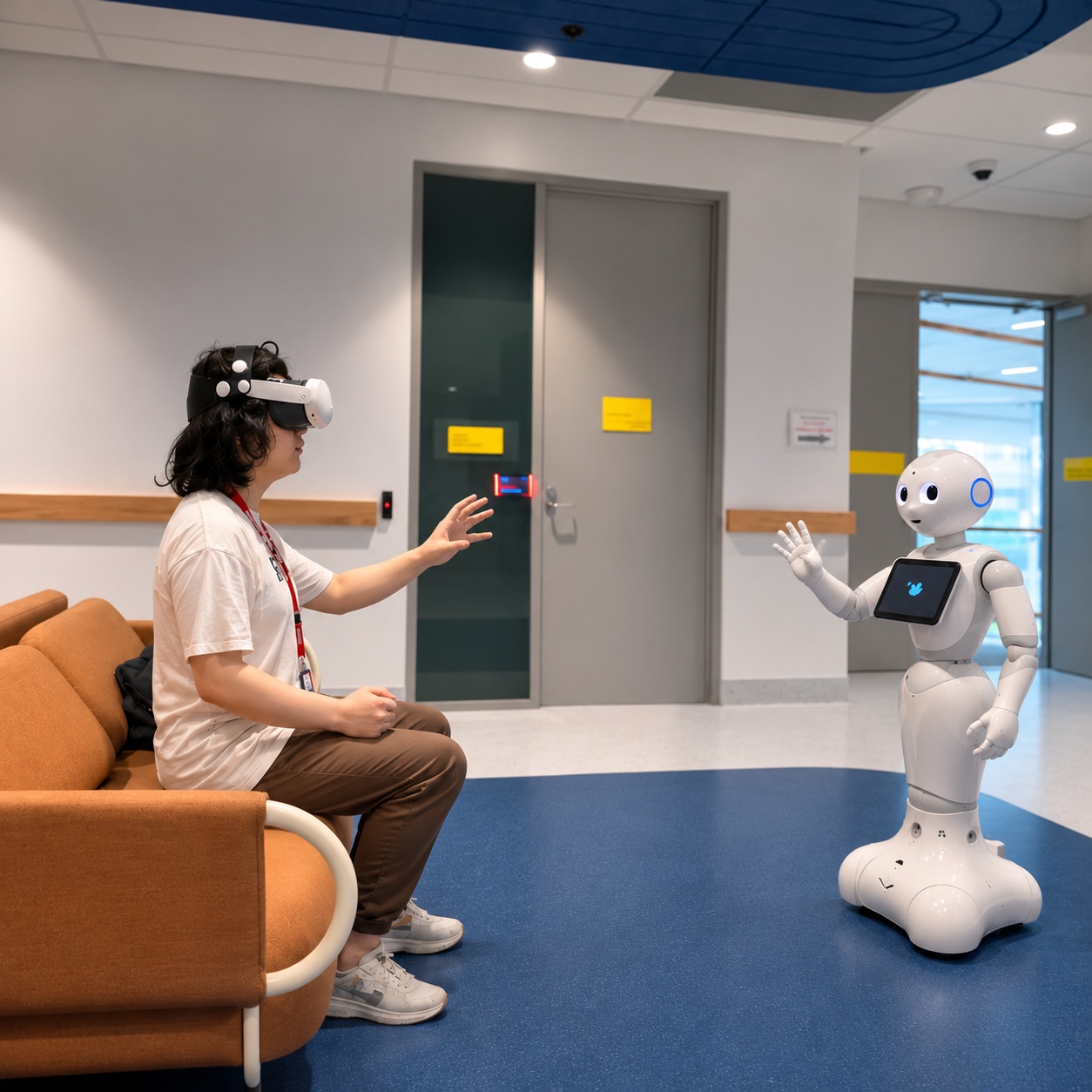
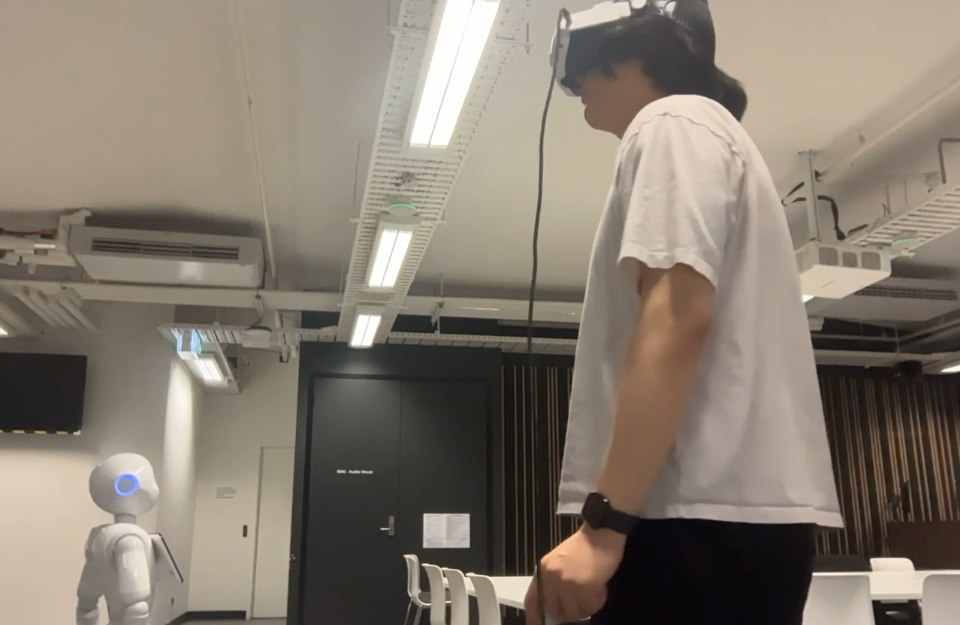
The research platform consists of a Pepper robot, a Meta Quest 3 headset, and an Intel RealSense D435i camera.
The planned evaluation compares three visualization conditions: live RGB-D, a static 3D Gaussian Splatting environment with localization,
and the same environment enhanced with real-time overlays.
Through tasks involving action understanding, navigation, and depth perception, the study aims to identify the benefits and limitations of each approach for operator performance,
embodiment, workload, and comfort.
Media:
Additional images/video